 Image 1 of 1
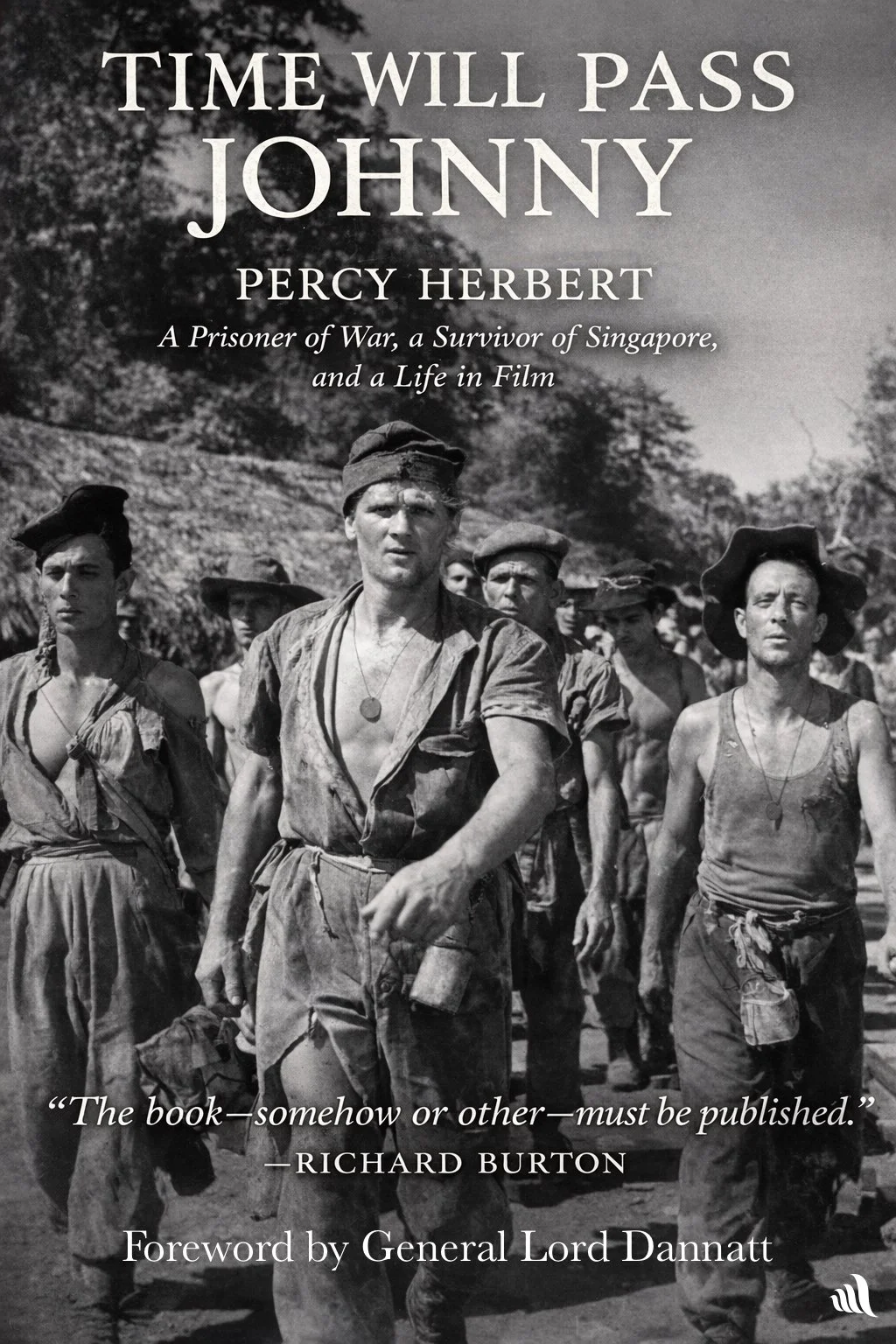
Time Will Pass Johnny by Percy Herbert (published on 1 June 2026)
from £8.50
Edition:
With a Foreword by General Lord Dannatt GCB CBE MC DL.
Former Chief of the General Staff and Patron of the National FEPOW Fellowship Welfare Remembrance Association
Before Percy Herbert became a familiar presence on screen, he survived one of the most brutal episodes of the Second World War.
Captured during the fall of Singapore in 1942, Herbert endured captivity as a prisoner of war, living through starvation, violence and the aftermath of the Alexandra Hospital massacre. These experiences would mark him for life — and later give his performances a depth and authority few actors could match.
After the war, Herbert returned to Britain struggling to rebuild. His life changed when he was discovered by Dame Sybil Thorndike, who recognised an extraordinary presence shaped by lived experience rather than training alone. What followed was a prolific acting career spanning more than ninety films, including The Bridge on the River Kwai, Tunes of Glory, The Cockleshell Heroes, Mutiny on the Bounty, The Wild Geese and The Sea Wolves.
This autobiography traces the journey from POW camps to film sets, revealing how trauma, discipline and survival shaped an actor whose screen work carried the weight of real experience. Herbert writes with clarity, restraint and devastating honesty about war — and about the strange, redemptive power of performance.
The manuscript’s impact was immediate. After reading an early draft, Richard Burton wrote:
“I read your book in two sittings, one before and one after dinner last night. The book had so appalled me that I wasn’t good company at dinner and nobody could make me smile and certainly not laugh. Jimmy Edwards’ jokes left me ice-cold. The book — somehow or other — must be published.”
Sir Roger Moore was equally moved, writing that “the last sixty pages had me in tears.”
A remarkable memoir of survival and transformation, this is not only the story of a prisoner of war, but the making of a great screen actor—one forged by history, and unforgettable because of it.
With a Foreword by General Lord Dannatt GCB CBE MC DL.
Former Chief of the General Staff and Patron of the National FEPOW Fellowship Welfare Remembrance Association
Before Percy Herbert became a familiar presence on screen, he survived one of the most brutal episodes of the Second World War.
Captured during the fall of Singapore in 1942, Herbert endured captivity as a prisoner of war, living through starvation, violence and the aftermath of the Alexandra Hospital massacre. These experiences would mark him for life — and later give his performances a depth and authority few actors could match.
After the war, Herbert returned to Britain struggling to rebuild. His life changed when he was discovered by Dame Sybil Thorndike, who recognised an extraordinary presence shaped by lived experience rather than training alone. What followed was a prolific acting career spanning more than ninety films, including The Bridge on the River Kwai, Tunes of Glory, The Cockleshell Heroes, Mutiny on the Bounty, The Wild Geese and The Sea Wolves.
This autobiography traces the journey from POW camps to film sets, revealing how trauma, discipline and survival shaped an actor whose screen work carried the weight of real experience. Herbert writes with clarity, restraint and devastating honesty about war — and about the strange, redemptive power of performance.
The manuscript’s impact was immediate. After reading an early draft, Richard Burton wrote:
“I read your book in two sittings, one before and one after dinner last night. The book had so appalled me that I wasn’t good company at dinner and nobody could make me smile and certainly not laugh. Jimmy Edwards’ jokes left me ice-cold. The book — somehow or other — must be published.”
Sir Roger Moore was equally moved, writing that “the last sixty pages had me in tears.”
A remarkable memoir of survival and transformation, this is not only the story of a prisoner of war, but the making of a great screen actor—one forged by history, and unforgettable because of it.